“Here imagination takes the lead and learning follows naturally.”
A Classroom Alive with Wonder
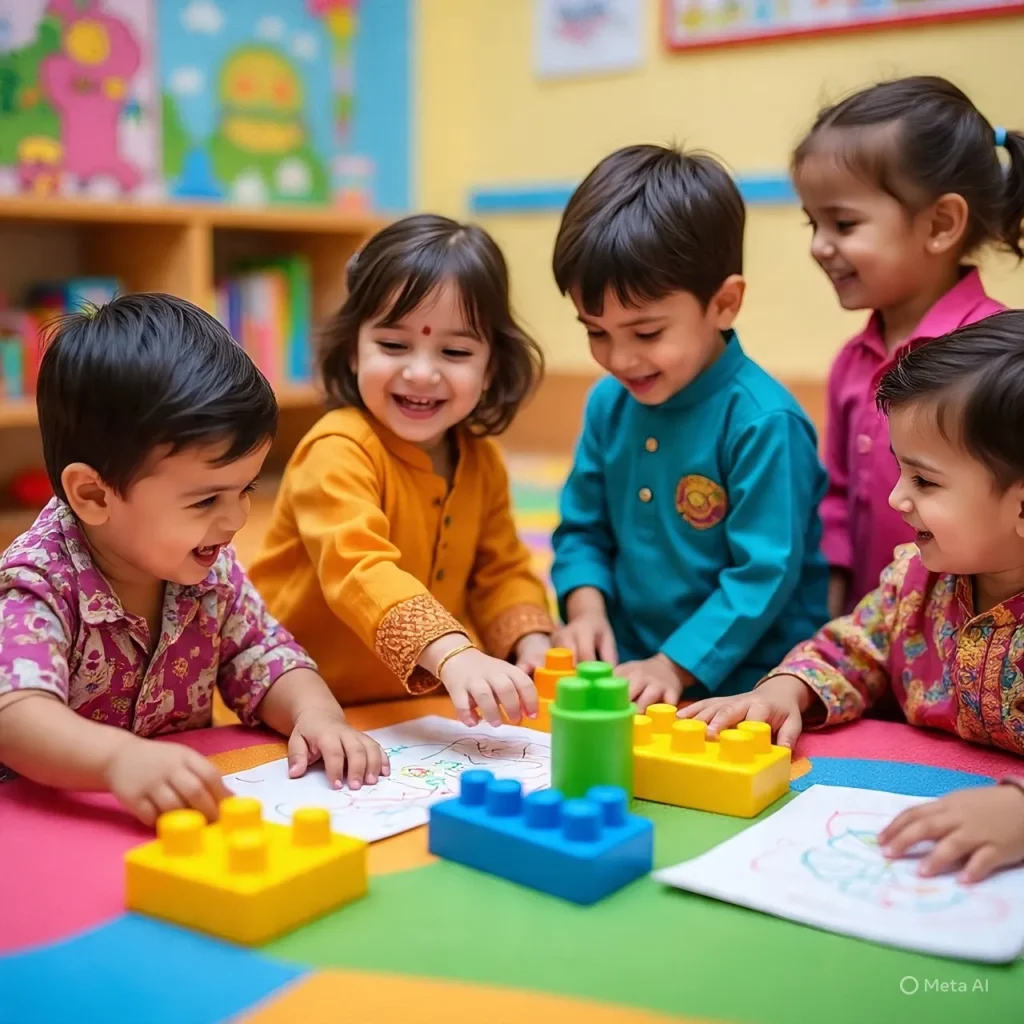
It’s a sunny morning, and the classroom hums with energy. Children gather around a colorful play corner filled with blocks, puzzles, and pretend-play sets. One child carefully balances a tower of wooden blocks, testing gravity and experimenting with shapes. Another sits with a puzzle, furrowing brows in concentration, delighting when pieces fit perfectly. Across the room, two friends pretend to run a little shop, exchanging toy fruits and negotiating prices. In these moments, toys are not just objects—they are partners in discovery, guiding children to explore, imagine, and problem-solve on their own terms. Every squeal of excitement, every triumphant “I did it!” reflects learning in action.
Why Free Play Matters
Free play is a powerful tool for holistic development:
- Cognitive growth: Open-ended toys encourage problem-solving, memory, and logical thinking.
- Motor skills: Manipulative toys enhance hand-eye coordination and fine motor control.
- Language and communication: Role-play and storytelling spark vocabulary, expression, and conversations.
- Emotional intelligence: Sharing, turn-taking, and collaborative play teach empathy and cooperation.
How We Encourage Free Play at School ✨
At our school, free play is carefully structured to let children lead their own experiences. Each day, children choose from a variety of learning stations—blocks, puzzles, pretend-play sets, and creative corners—exploring at their own pace. Story-based play with dolls, action figures, or mini kitchens encourages imagination and narrative thinking, while building sets and puzzles develop spatial reasoning, planning, and problem-solving skills. Teachers observe subtly, guiding with open-ended questions such as, “What happens if we try this?” or “Can you show me your idea?” without giving direct instructions. Children are encouraged to reflect on their play, share discoveries with peers, and even demonstrate solutions during small group discussions. This approach ensures that free play remains both child-led and enriching, fostering independence, creativity, and confidence in every activity.
Your Home, Their Playground 💡
Parents can nurture free play beyond school:
- Provide open-ended toys such as blocks, puzzles, or pretend-play items.
- Allow children to lead their own playtime, letting imagination flourish.
- Allow children to lead their own playtime, letting imagination flourish.
- Observe occasionally, ask questions, and celebrate creativity, reinforcing confidence.
Play That Lasts Beyond the Toy Box
When children lead their own play, they learn to explore, imagine, and problem-solve independently. Toys become silent teachers, and free play transforms into a classroom without walls. By letting toys guide the way, children gain not just fun, but curiosity, confidence, and creativity—lessons that last far beyond the playroom.