From silly rhymes to ladoos and tablas: how early phonics builds confident little readers.
A Morning of Giggles and Sounds
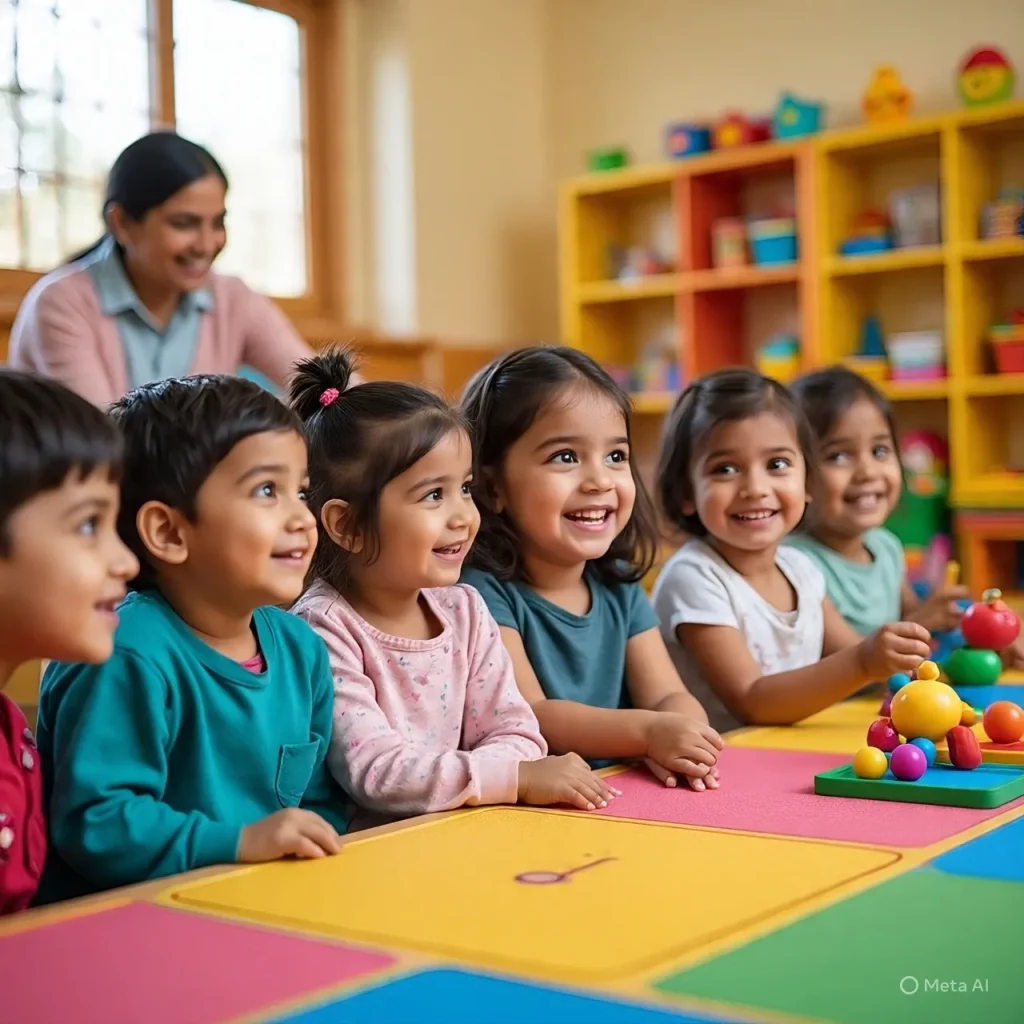
Picture this: a group of preschoolers sitting in a circle, eyes sparkling as the teacher holds up a flashcard. “Ssss… snake!” she hisses dramatically. Instantly, little voices copy her—some stretching the sound, some bursting into giggles. A moment later, the room buzzes as children hunt for objects beginning with “s”—from a shoe to a soft toy. This is phonics at its best—alive, joyful, and deeply memorable.
Why Phonics Matters in Early Learning
Phonics is the bridge between sounds and letters, the first step towards making children confident readers. Instead of memorizing words, children discover the logic behind language.
- When a child learns that “c-a-t” blends to “cat”, they realize how sounds form words
- Clapping along to rhymes like “bat, cat, hat” strengthens their awareness of word families.
- Acting out sounds like buzzing “zzz” for a bee, chomping “mmm” for mango, or tapping “ta-ta-ta” for tabla turns abstract learning into a lively game.
Phonics does more than teach reading—it builds listening, memory, and confidence that carry over into all learning.
How We Make Phonics Fun at School
At our school, phonics isn’t a drill—it’s an interactive adventure. Teachers weave music, movement, and storytelling into every session. Children might hop on mats marked with letters, toss a ball while saying the sound it lands on, or giggle through silly tongue-twisters.
Puppets exaggerate sounds—“P…P…Parrot!”—drawing laughter and eager repetition. Even themes and festivals become learning moments. During Janmashtami week, the “K” sound might be introduced with “Krishna, kite, kangaroo.” For “L,” children joyfully chant “la-la-la for ladoo”, and during music time, they may beat a tiny drum while practicing “ta-ta-ta for tabla.”
Every sound is taught as an experience—something to laugh with, act out, and remember.
How Parents Can Nurture Phonics at Home
Parents can easily extend phonics fun into daily life:
- Play “I Spy” with sounds (e.g., “I spy something that begins with ‘b’”).
- Sing rhyming songs or jingles together—make up silly ones too!
- Read picture books aloud, stretching the first sound of words for emphasis.
- Spot letters and sounds on signboards, cereal boxes, or storybooks.
- Encourage your child to act out sounds—buzz like a bee or drum like a tabla.
A Sound Beginning for Lifelong Learning
Phonics, when taught with joy, lays the foundation for a love of language. It isn’t about pressure—it’s about play, rhythm, and discovery. When children giggle while buzzing like bees or chant “la-la-la for ladoo,” they are doing far more than learning sounds—they’re building curiosity, creativity, and confidence to explore the world of words.