“From shy whispers to joyful voices — circle time grows them all.“
A Morning Circle Full of Voices
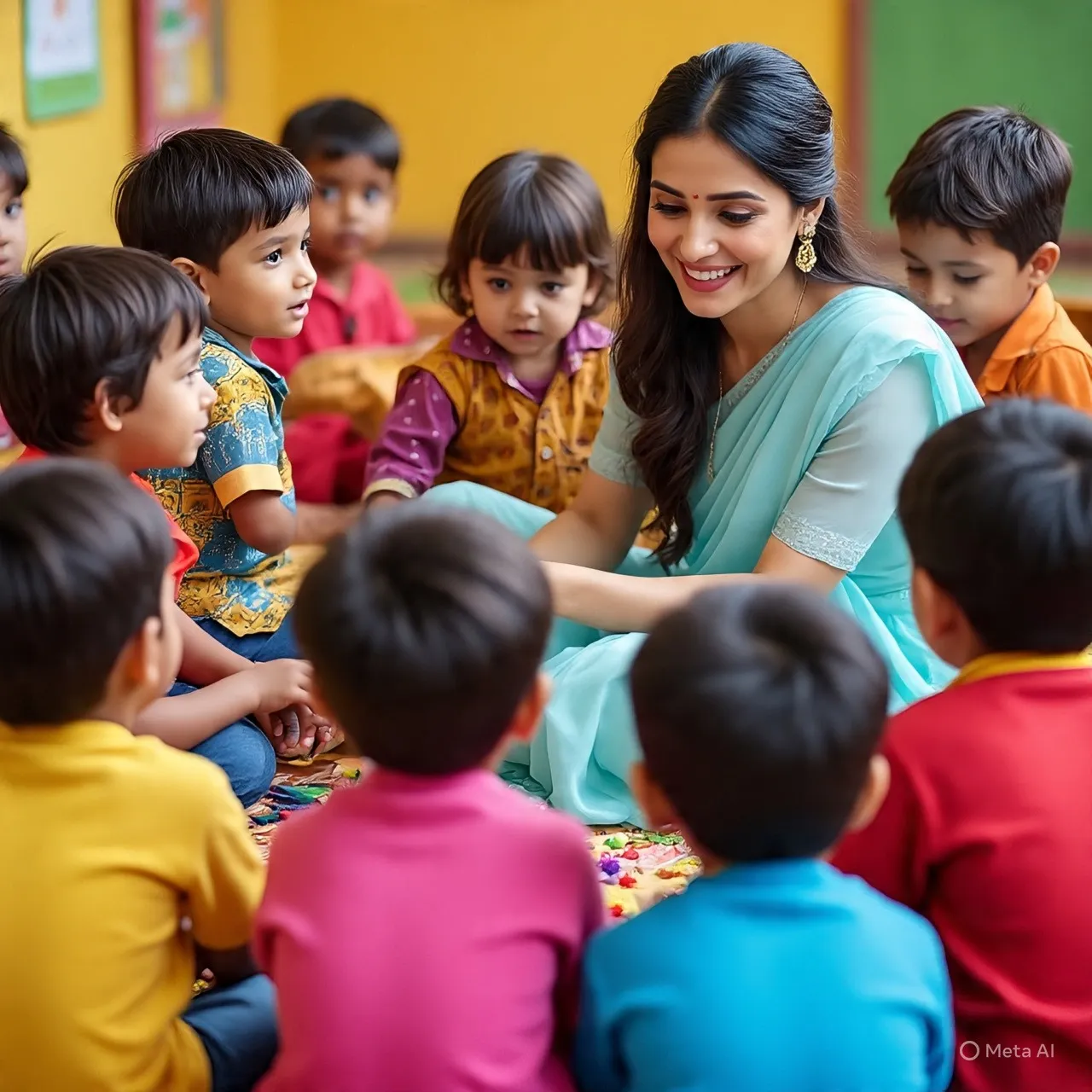
It’s 9:30 a.m. and the classroom is buzzing. Children gather in a big circle, some hugging their friends, others sitting eagerly on the mat. The teacher begins with a cheerful song—soon the room echoes with claps, giggles, and tiny voices singing in unison. A story follows, acted out with expressions and gestures, and then a child shyly raises a hand to share what happened at home. This is circle time—our daily moment of connection, conversation, and confidence.
Why Circle Time is the Heartbeat of Preschool
Circle time is more than routine—it’s the soul of the classroom. It gives every child a voice, teaching them to listen, take turns, and express themselves without fear. Through rhymes, stories, and conversations, children learn the rhythm of language, empathy for others, and the joy of being heard. For many, this is the first step towards public speaking, teamwork, and building lasting friendships.
How We Nurture Communication Through Circle Time
At our school, circle time goes beyond rhymes and stories—we weave in communication-building activities that spark expression and listening skills:
- Show & Tell: Children bring an object from home and describe it, building vocabulary and confidence.
- Emotion Cards: Children pick a card (happy, sad, excited) and share a moment when they felt that way.
- “Pass the Question” Game: Each child answers a simple question (“What’s your favorite fruit?”) and then asks the next child.
- Story Starters: Teachers begin a story, and children take turns adding to it, stretching imagination and language.
These small yet powerful activities gently shape children into curious thinkers and clear communicators.
How Parents Can Spark the Circle at Home
Circle time magic doesn’t have to stay at school—parents can create mini versions at home:
- End the day with a family sharing circle where everyone says one happy moment.
- Play “Guess the Emotion” by making expressions and asking your child to describe them.
- Read a short story together and let your child narrate their favorite part.
- Encourage your child to ask questions about your day too—it teaches listening and empathy.
Little Circles, Big Lessons
Circle time may look simple—songs, stories, and smiles—but it holds the power to build a child’s voice, confidence, and social bonds. Every rhyme recited, every story told, every hand raised to speak is a step toward turning our children into thoughtful communicators and compassionate listeners.